
Your vehicle’s suspension system plays an important role in ride comfort, handling, steering, and braking. It also helps keep your tires in consistent contact with the road. When suspension components begin to wear out, your vehicle may give you several warning signs.
Some suspension problems start with a minor noise or slightly rougher ride. Others can affect how your vehicle handles corners, stops, or travels over uneven roads. Recognizing the common symptoms of suspension issues can help you get a problem diagnosed before it leads to additional damage.
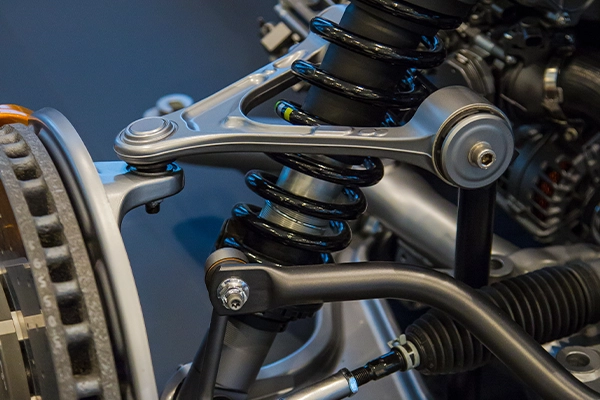
1. Your Vehicle Bounces Excessively
A vehicle should settle relatively quickly after traveling over a bump. If it continues bouncing several times after hitting a rough section of road, worn shocks or struts could be responsible.
Shocks and struts help control the movement of the springs and suspension. As they wear, the suspension can lose some of its ability to control bouncing.
Excessive bouncing can also make the vehicle feel less stable, particularly at highway speeds or on uneven roads.
2. The Vehicle Pulls or Drifts
If your car seems to pull toward one side while you’re driving on a relatively straight road, the suspension could be part of the problem.
A vehicle pulling to one side can have several possible causes, including:
- Wheel alignment problems
- Uneven tire pressure
- Uneven tire wear
- Worn suspension components
- A sticking brake caliper
- Damaged steering components
Because several systems can create similar symptoms, a professional inspection can help determine the actual cause.
3. Uneven Tire Wear
Your suspension system affects how your tires contact the road. When suspension components become worn or damaged, the wheels may no longer maintain the proper position during normal driving.
This can lead to unusual tire wear patterns, including excessive wear on one edge of the tire.
If you notice that one tire is wearing significantly faster than the others, have the tires and suspension inspected. Continuing to drive on improperly worn tires can reduce traction and shorten tire life.
4. The Vehicle Dips When Braking
Some forward movement during braking is normal. However, excessive nose-diving when you apply the brakes can indicate worn shocks or struts or other suspension problems.
A vehicle that dips significantly during braking may also feel less controlled during emergency stops.
Since braking and suspension systems work together to maintain vehicle stability, this symptom deserves prompt attention.
5. Excessive Body Roll Around Corners
Does your vehicle feel like it leans noticeably when you turn?
Some body movement is expected, but excessive leaning through corners can indicate worn shocks, struts, stabilizer bar components, or other suspension parts.
Excessive body roll can make the vehicle feel less predictable and may become particularly noticeable during quick lane changes or sharper turns.
6. You Hear Clunking or Knocking Noises
Suspension noises are another common warning sign.
You might hear a clunk, knock, squeak, or rattling sound when driving over bumps, entering a driveway, or turning the steering wheel.
Potential sources include:
- Worn control arm bushings
- Damaged ball joints
- Worn sway bar links
- Loose or damaged suspension hardware
- Worn strut mounts
- Damaged shocks or struts
The location and conditions under which the noise occurs can help a technician narrow down the source.
7. The Ride Feels Rougher Than Usual
A noticeable change in ride quality can indicate that suspension components are wearing out.
If your vehicle suddenly feels harsh over bumps, transmits more road vibration into the cabin, or seems less comfortable than it used to be, the suspension deserves an inspection.
A rough ride can also be caused by tire pressure, tire damage, or other issues, so it is important to have the entire vehicle evaluated rather than assuming one component is responsible.
8. The Vehicle Sits Lower or Unevenly
Take a look at your vehicle when it is parked on a level surface.
If one corner appears noticeably lower than the others, there could be a problem with a spring, suspension component, or another part supporting the vehicle.
A broken or weakened spring can affect ride height and may also change the way the vehicle handles.
Uneven ride height can also contribute to alignment and tire wear problems.
9. Steering Feels Loose or Unstable
Suspension and steering systems work closely together. Worn suspension components can affect how accurately the vehicle responds to steering inputs.
You may notice:
- Excessive steering wheel movement
- Wandering at highway speeds
- Delayed steering response
- A vehicle that feels unstable in corners
- The need to constantly correct the steering
These symptoms should be inspected promptly because steering and suspension problems can affect vehicle control.
10. You Notice Fluid Leaking From a Shock or Strut
Many shocks and struts contain hydraulic fluid. If a shock or strut develops a significant leak, its ability to control suspension movement can be reduced.
A small amount of surface moisture may not necessarily indicate a failed component, but visible fluid leakage should be evaluated by a qualified technician.
Replacing worn shocks or struts can help restore proper suspension control and ride quality.
How Long Can You Drive With Suspension Problems?
The answer depends on which component has failed and how severe the problem is.
A minor suspension noise may allow you to drive temporarily while scheduling an inspection. A broken spring, severely worn ball joint, badly damaged control arm, or seriously degraded shock or strut can create a much more urgent safety concern.
If your vehicle is handling differently, making unusual suspension noises, or showing signs of uneven tire wear, it is a good idea to have it inspected rather than waiting for the problem to get worse.
What Happens During a Suspension Inspection?
A technician can inspect the suspension for worn, loose, damaged, or leaking components. Depending on the symptoms, the inspection may include:
- Shocks and struts
- Coil or leaf springs
- Control arms
- Ball joints
- Sway bar links and bushings
- Strut mounts
- Suspension bushings
- Steering components
- Wheel alignment
- Tire condition and wear
The goal is to identify the source of the problem and determine whether any other components have been affected.
Suspension Service & Repair in Silverdale, WA
Suspension problems can start with something as simple as a new noise or a slightly rougher ride. Over time, worn suspension components can contribute to uneven tire wear, poor handling, alignment problems, and reduced vehicle stability.
If your car is bouncing excessively, pulling to one side, leaning through turns, making suspension noises, or showing unusual tire wear, schedule an inspection with the trusted team at Silverdale Autoworks in Silverdale, WA.